Lead Management in CRM Systems Step by Step
CRM systems automate lead capture, scoring, and routing to convert stalled prospects into sales.
What a CRM is doing during lead management
Start here: 79% of leads that come through the marketing door never turn into a sale. Not because there weren't enough of them, and not because the product was wrong for them. They died in the hallway between "captured" and "closed," usually because nobody followed up fast enough, or nobody followed up at all.
A quick distinction before the walkthrough. A lead management system exists for one purpose: conversion and daily sales output. Score it, route it, close it. A full CRM handles the whole customer relationship, service tickets and renewal calls included. The steps below live right where those two overlap, and most of the tools people call "CRM" in casual conversation are doing both jobs at once, whether anyone planned it that way or not.
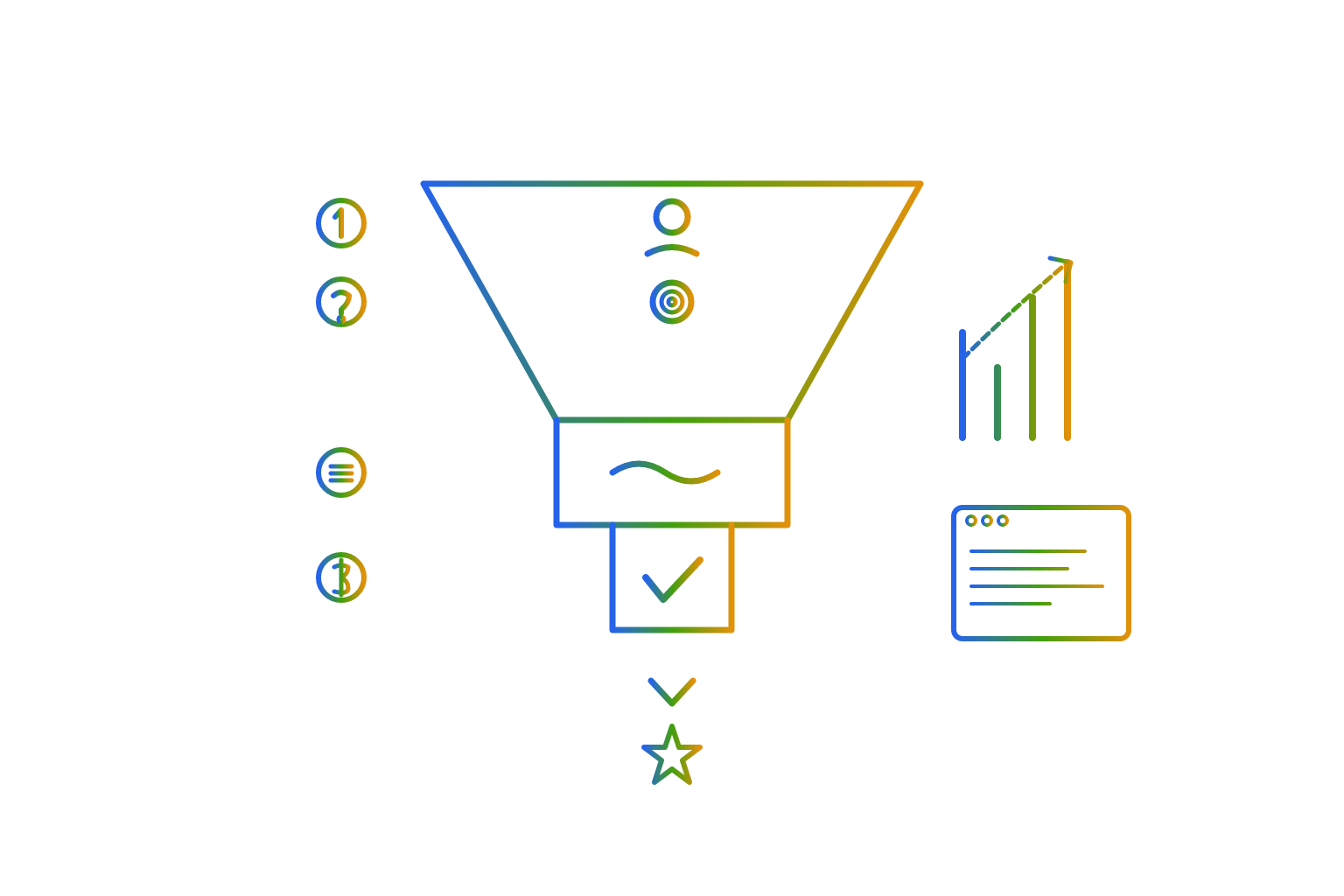
A CRM's real job is pulling contact data in from every channel a lead might show up in, giving that lead a paper trail, and building the one record every future action gets hung on. Skip that record and nothing downstream has anything to stand on. Underneath the dashboard, a handful of things run constantly: leads get captured automatically from forms, email, social, and ad platforms so nobody's typing names into a spreadsheet at 6pm. Contact data syncs in real time as people change jobs. A visual pipeline shows anyone, at a glance, which stage a lead sits in. Every call and email gets logged so the next rep isn't starting cold. Scoring rules run in the background, updating who matters most as behavior shifts, and automation fires off reminders and routing based on whatever the data says right now.
Whether companies adopt these platforms no longer carries any interest. Most companies past a handful of employees already run one. What matters is whether anyone's using it as a decision engine or just as an expensive rolodex, and the position worth taking is this: a CRM that only stores information is a filing cabinet with a login screen. That's a waste of the license fee. Used properly, it's the thing deciding who gets called today, how urgently, with what message, and which campaign gets more budget next quarter.
Step 1: Lead generation and the source tagging the CRM records
Leads walk in from a dozen doors. Paid ads, web forms, landing pages, social, cold outreach, events, gated PDFs nobody reads past page two, live chat widgets. Every door needs a label the moment a lead steps through it, because that label is the only way anyone will ever know which door actually worked.
A rep's cold LinkedIn message and someone downloading a whitepaper flow into the exact same CRM record type. At the moment of capture, the system treats them identically. The only thing separating them later is the source data attached right now, at the door, before the lead does anything else.
What gets written down at entry: source channel, campaign ID, timestamp, contact info, and whatever firmographic detail is on hand (company size, industry, role). Skip source tagging here, and there's no fixing it later, full stop. A closed-won deal six months out can't get traced back to the campaign that earned it if nobody wrote that campaign's name down on day one. Attribution doesn't get reconstructed after the fact. It gets built at intake or it never exists.
For B2B SaaS teams in crowded markets with long sales cycles and five people on the buying committee, this step needs one more thing: flag ICP fit right at intake. Otherwise a rep burns forty minutes on a lead that was never going to buy, because nothing in the system told them not to bother.
Step 2: Lead capture, eliminating the gaps where leads vanish before they're seen
Capture is the exact instant a lead's information gets written into the CRM. Any delay between "someone showed interest" and "record exists" is lead loss, permanent and unrecoverable. Nobody circles back six weeks later out of guilt.
The failure points are almost boring in how repeatable they are. Manual entry as the backup plan, slow and inconsistent depending on which rep is typing that day. Ad platforms that don't push data into the CRM in real time, so leads sit in a Meta or LinkedIn export file for two days doing nothing. Web forms that aren't wired directly into the CRM, creating a batch-import lag. The same person showing up twice through two channels, creating duplicate records that both get worked, or worse, neither one does.
None of that is complicated to fix in concept, even if it takes real setup work. Web forms, email parsing, ad integrations, and chat tools should write straight into the CRM without a human deciding when to copy it over. Better systems validate the data as it lands too: checking for duplicates, flagging missing fields, cleaning the record before it enters the pipeline instead of after a rep has already wasted a call on a dead phone number.
This isn't a one-time fix, either. Contact data goes stale on its own, roughly 30% of it every year, as people change jobs and email domains die and companies get bought out. Clean capture is a daily habit the CRM has to enforce for as long as the pipeline exists.
Step 3: Lead qualification and scoring, how the CRM decides who deserves attention first
Qualification runs on two separate questions, and mixing them up is where most scoring models fall apart. Who is this lead? That's fit scoring: industry, company size, title, stated pain, measured against what the ideal customer actually looks like. What is this lead doing? That's behavioral scoring, and it cares about frequency, recency, and specific actions like pricing page visits or trial logins.
Behavioral scoring is the one that actually catches momentum, and it deserves more weight than most teams give it. Someone who visited the pricing page three times this week is worth more attention than someone who downloaded an ebook eight months ago and went quiet, even if their firmographic fit looks identical on paper.
Negative scoring matters just as much, and it's the part most teams skip. Personal webmail addresses, students, competitors filling out demo forms out of curiosity: all of it should get pushed down automatically, so the leads that deserve a call don't get buried under noise.
For SaaS specifically, product usage data turns the CRM into something closer to a live wire. Every trial signup becomes a lead record, and product events should flow straight into custom fields on that record. Points get assigned per action, so the score reflects what someone's actually doing inside the product, not what a form said three weeks ago. Frameworks like BANT (budget, authority, need, timeline) give reps a structured way to capture what they learn during real calls.
Scoring done well is core to the process. A sales team working leads in the order they arrived is leaving conversion potential on the table compared to one working them in the order they're most likely to close. And a score set once at intake, never touched again, misses the point: a lead that looked cold six weeks ago and just hit the pricing page this week should be surfaced again, not left buried in the same position.
Step 4: Lead routing, getting the right lead to the right rep before the window closes
Routing is the handoff moment. The CRM stops running on autopilot and hands a specific lead to a specific human. This step should happen instantly, follow clear rules, and arrive with context already attached.
The rules doing the routing usually sort by territory or geography, product line or use case, account size, rep workload (round-robin or by capacity), and score threshold, below the line into nurture, above it straight to a rep. Whatever record lands on a rep's desk should already carry the lead's whole story: source, score, prior interactions, firmographic detail, product usage if there is any. A rep shouldn't have to play detective before the first call.
Speed determines conversion outcomes here, since slower responses cost conversions in a way that's measurable, not theoretical. Response time is a number the CRM can track cleanly, and slower responses cost conversions in a way that's measurable, not theoretical. Flagging records that blow past the team's SLA should happen automatically, catching the problem before a manager notices during a Friday review three weeks too late.
A lot of teams struggle just to get buyers into a two-way conversation once a lead's routed, and reaching new buyers at all is its own separate headache. Bad routing doesn't cause either problem on its own. But it makes both worse, every single time a good lead sits in the wrong inbox collecting dust.
Step 5: Lead nurturing, running sequences in the CRM while leads aren't yet ready to buy
Most leads sitting in a CRM on a random Tuesday aren't ready to buy anything. That's not a flaw in the process, it's just how buying works. Nurturing keeps those leads warm until their timing changes, instead of losing them to silence in the meantime.
Inside the CRM, nurturing usually runs as email sequences triggered by time delays or specific actions, content matched to stage (educational material early, comparison guides and case studies in the middle, ROI calculators near the decision point), scores updating as leads engage, and automatic re-routing once a nurtured lead crosses the SQL threshold and is ready for a rep.
Chasing more top-of-funnel traffic is the expensive habit, and nurturing the leads already sitting in the system is the cheap one. It's usually the first thing cut when budgets tighten, which gets the priority exactly backwards. Teams that nurture well generate more sales-ready leads at meaningfully lower cost than teams that just keep pouring in more traffic.
Personalization is doing most of the heavy lifting in why this works. Buyers read through a stack of content, often more than a dozen separate pieces, before picking a vendor, and the nurture sequence is where most of that reading happens. It's where the actual relationship with the vendor gets built, quietly, months before a sales call ever happens.
The CRM's job is running that personalized logic across hundreds or thousands of leads at once without flattening every message into the same generic template. Anyone can write one good email. Writing a thousand slightly different good emails, each matched to what that specific lead actually did, is what the automation layer exists for.
Step 6: Pipeline management and the marketing-to-sales handoff
The pipeline view is the CRM's whole point, visually speaking. New Lead, Contacted, Qualified, Proposal Sent, Closed, every lead sitting in its own column, bottlenecks visible instead of buried in some rep's private notes app.
The handoff between marketing and sales is where this usually breaks, and it breaks the same way every time. Marketing considers the lead handed off the moment it's routed. Sales considers it not yet worked. The lead, meanwhile, just experiences silence and doesn't much care whose column it's stuck in.
Fixing it takes a few things written directly into the system. MQL and SQL definitions need to live inside the CRM's scoring thresholds, so "qualified" isn't up for debate every quarter. A shared dashboard, where marketing and sales look at the same lifecycle stages and the same conversion numbers, turns arguments about lead quality into something other than arguments about whose data is right. A meaningful share of go-to-market teams still fumble this exact handoff, and the failure produces buyer silence first, then internal finger-pointing second.
Forecasting lives here too, and it's a decent gut check on whether the pipeline is honest. A CRM where stages get updated accurately produces a forecast worth trusting. A CRM where reps forget to move deals along produces a forecast that's really just a guess wearing a spreadsheet.
Step 7: Conversion, attribution, and closing the data loop
A closed-won deal gets logged with the outcome, the timeline, and the rep who closed it. That part's simple enough, mechanically.
Attribution is the harder half, and it's the payoff for all that source tagging back in Step 1. The closed deal needs to trace back to the channel, the campaign, and the specific piece of nurture content that actually moved the needle. Skip this, and marketing ends up defending next quarter's budget with vibes instead of numbers, and nobody can repeat whatever actually worked.
Only about a fifth of B2B marketers track ROI on lead generation this closely. Most teams run all six prior steps without ever closing the loop that tells them if any of it worked, and that's the expensive part. Not the wasted ad spend. The wasted learning.
Post-close data hygiene matters just as much as pre-capture hygiene, since the same data decay that erodes fresh leads affects the broader CRM over time. Contacts change jobs, companies get bought, addresses die on the vine.
Pull three numbers from the CRM after every close: revenue per lead by source or segment, showing which channels turn into paying customers. Sales cycle length, time from first capture to close, where a shrinking number is real evidence the process works. And close rate broken out by source, segment, and rep, which usually reveals the actual leverage point nobody was looking at.
None of this is decoration. Teams that run this loop properly see real gains in conversion, retention, and rep productivity, and those gains compound specifically because the data from Step 7 feeds back into Steps 1 through 6. Leave the loop open, and every step before it is just activity with no way to tell if it worked.
Where AI is changing the execution of each step
AI is running these seven steps faster, with more signals feeding each decision, at a scale no team of humans checking spreadsheets by hand could match. It's running them faster, with more signals feeding each decision, at a scale no team of humans checking spreadsheets by hand could match.
Scoring shows this clearest. AI models chew through behavioral patterns across huge datasets and update scores continuously instead of on some manual weekly cycle, and a large majority of B2B marketers already report using AI somewhere in qualification.
Nurturing gets sharper, not louder, since it cuts against the instinct to just send more emails. AI-driven nurture sequences show real gains in lead-to-opportunity conversion, and the mechanism is better timing and better content matching, not higher volume. Nobody converts better because they got emailed twice as often. They convert because the third email actually answered the question they had.
The compounding is most visible in prioritization and forecasting. AI-enhanced prioritization has cut sales cycle length in measurable studies, and CRM systems with AI forecasting layered in report meaningful improvements in accuracy alongside shorter deal cycles. One widely cited industry report on B2B lead generation found companies using AI-powered lead gen saw qualified lead volume jump sharply within six months, a number large enough to reshape how a team defines its ICP as well as how fast a rep answers a form fill.
Adoption is heading toward default, not edge case. Within the next year or two, the large majority of organizations expect to run AI-powered CRM in some form. None of that changes the seven steps above. It just means the gaps between them, the places where leads have historically gone quiet, keep getting smaller and harder to hide.