Lead Routing Rules and Assignment Automation in Sales Ops
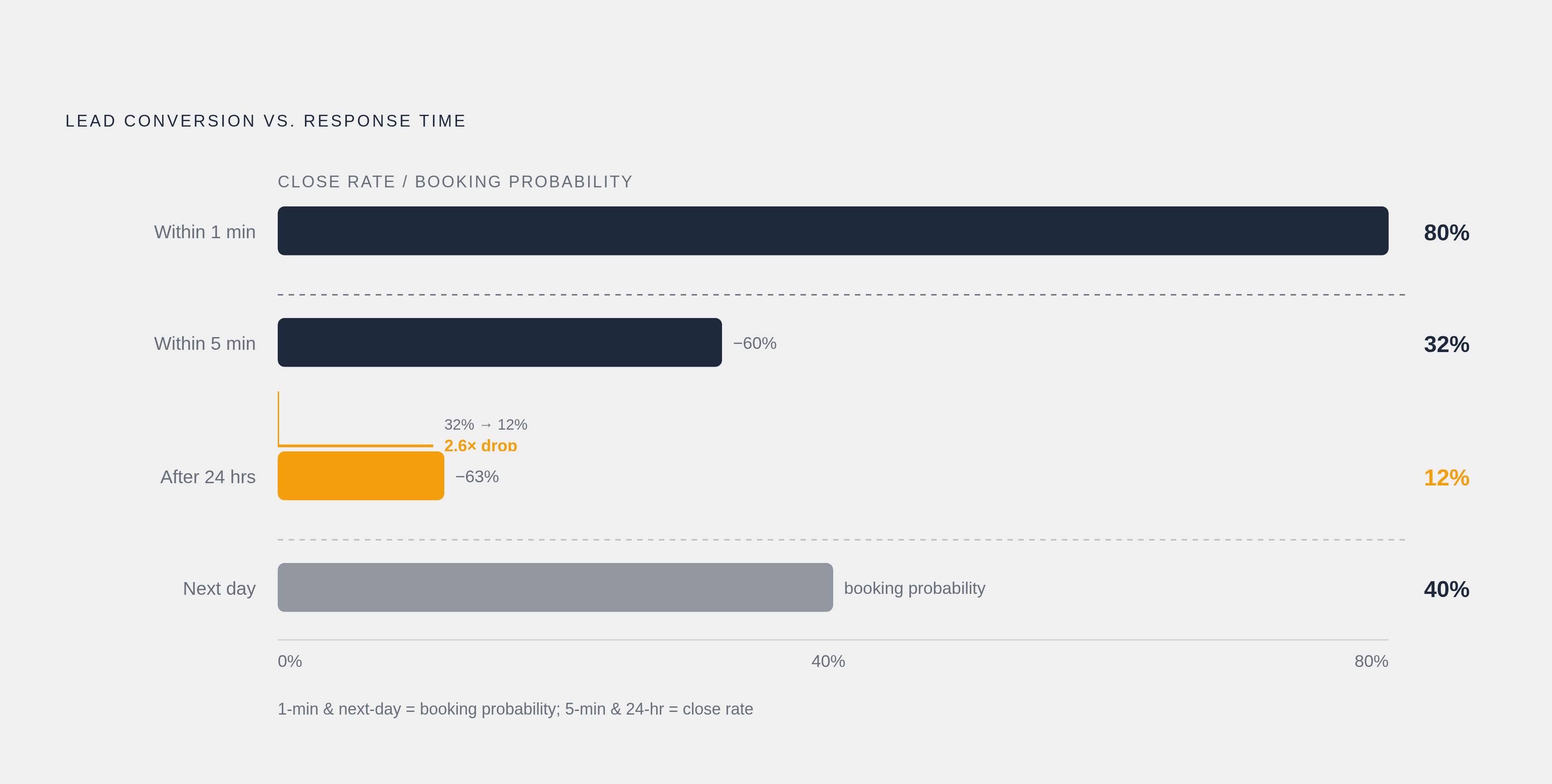
Fast lead assignment directly drives conversion rates—speed drops close rates from 32% to 12%.
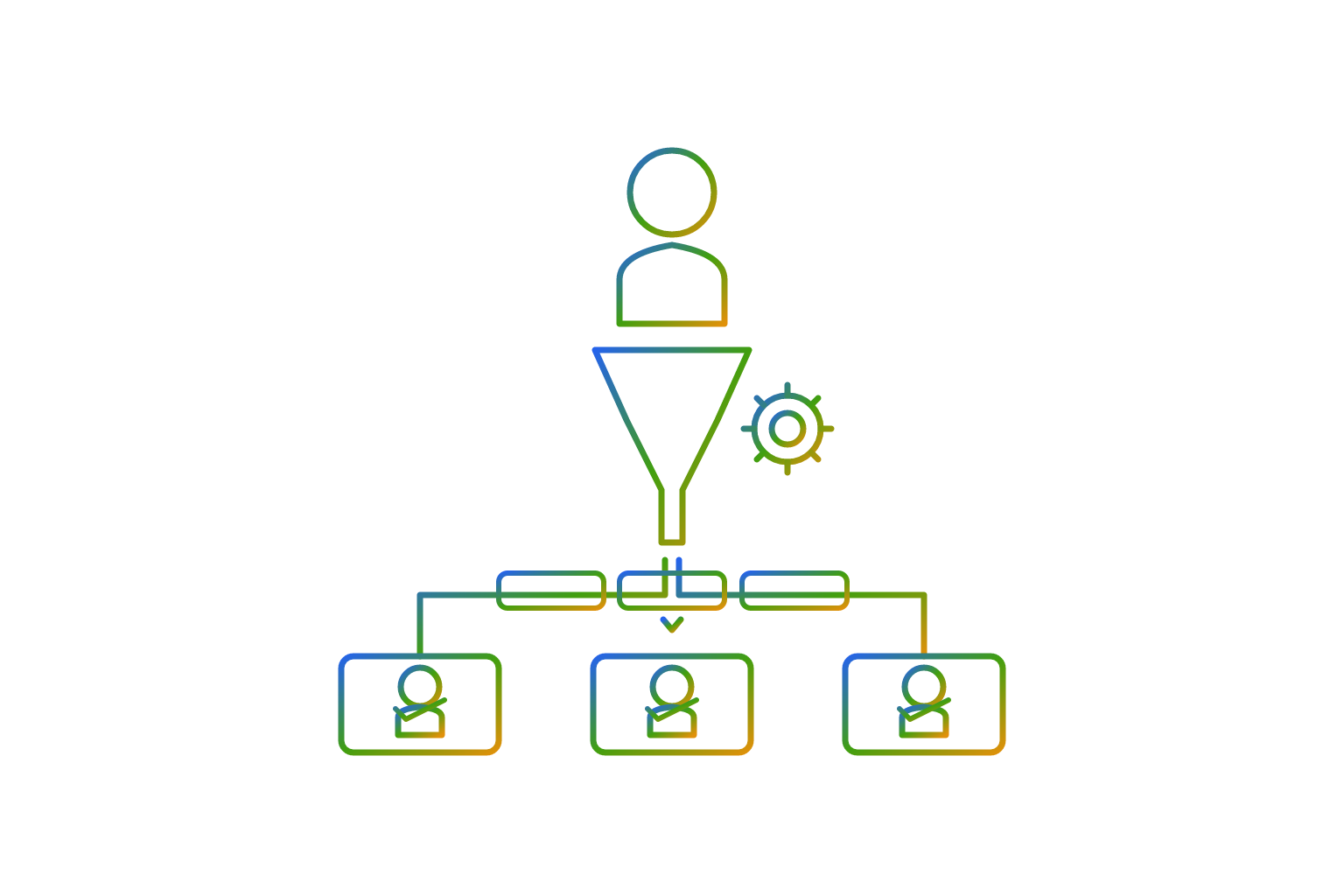
Lead routing is the process that decides who gets a lead the second it lands in the CRM. Do it well and reps call prospects while they're still warm. Do it badly and hot leads sit in a queue until they've gone cold, or land on the desk of a rep with zero context about what to say to them.
The mechanics sound almost boring when you say them out loud: capture the lead, qualify it, run it through the rules, assign it, ping the rep, hold someone accountable for following up. Six steps. But sales teams don't stay small. New product line, new region, a senior rep who should get more volume than the new hire. Suddenly there's an exception for that, and an exception for the exception, and six months later nobody remembers why Lead Rule #47 exists, only that deleting it broke something in March.
That's the invisible cost of routing debt. Nobody notices the system has quietly rotted until a six-figure lead lands with the wrong rep, or sits untouched for two days, or someone asks in Slack why a particular rep received a lead and the whole floor goes quiet. This piece walks through how routing actually works inside Salesforce, where the built-in tools hit a wall, and what a system looks like when it doesn't need a rebuild every time the org chart changes.
Three Native Salesforce Routing Methods, Compared
Most teams start with some combination of three tools: Assignment Rules, Flows, and Enterprise Territory Management. Each does one job reasonably well and falls apart the moment you ask it to do more.
Lead Assignment Rules, or SARs, match incoming leads to reps or queues based on conditions someone set up ahead of time. They fire the instant a record gets created. Salesforce stops checking the rest of the rules once a lead matches one of them. That's efficient when there are ten rules. It's a real headache when there are two hundred, all built by hand, with nothing checking whether Rule #83 quietly contradicts Rule #12. According to LeanData's research, organizations running complex go-to-market motions routinely end up with rule lists that size, maintained manually, with zero built-in conflict detection.
Flows add branching logic, field updates, and multi-step sequences that SARs can't handle on their own. The tradeoff is that Flows need someone who actually knows Salesforce development to build and maintain. As the org scales, multiple Flows firing on the same object at once can hit Apex CPU time limits, which reverts the whole transaction and leaves data in a broken state. When a routing system starts throwing CPU errors on lead creation, the team has outgrown what native automation can carry.
Enterprise Territory Management handles the third piece: assigning accounts and opportunities to territories, then routing based on who owns that territory. ETM doesn't match a new lead to an existing account by itself. A separate matching step has to connect the incoming lead to the account it belongs to before territory logic has anything to work with. For account-based sales motions, that's an entire extra system to build and maintain.
All three tools share the same blind spot. They're rule-based and static: they fire when a record comes in, but they don't think. A routing setup can execute flawlessly on every single lead and still send half of them to the wrong person, because "fired correctly" and "assigned correctly" are two different things.
Where Native Routing Breaks Down
Three failure patterns recur, and each one needs a different fix.
The first is reps getting flooded with too many leads at once. Native assignment rules don't check anyone's workload before handing off a lead. The best closer on the team ends up buried under forty active leads while another rep waits for something to come in. There's no native way to cap volume or weight it so that a senior AE pulls twice the leads of a junior one. The lead just goes where the rule says, regardless of capacity, which increases burnout and causes SLAs to slip.
The second is the developer bottleneck. Adding a product specialist or redrawing a territory boundary shouldn't require filing a Jira ticket and waiting for a deployment window. But that's exactly what happens when RevOps can't touch the routing logic without pulling in engineering. Workarounds follow: spreadsheets appear, someone starts emailing an Excel file to track who actually owns which account, because the CRM stopped reflecting reality months ago. Once that happens, the CRM isn't the source of truth anymore.
The third is the data residency problem. Some external routing tools pull lead records out of Salesforce to process them elsewhere, which adds latency and raises a security question that wasn't there before. Under 2026-era GDPR and CCPA expectations, data residency is a hard requirement for enterprise buyers. That's a significant reason many teams steer clear of integrations that ship records outside the CRM boundary.
Identifying which of these three a team is actually dealing with determines which fix is appropriate, because the fix for a capacity problem looks nothing like the fix for a developer bottleneck, and applying the wrong solution just adds another layer of complexity on top of the existing ones.
Speed-to-Lead Has a Measurable Revenue Impact
Across 939 B2B companies, the average lead response time was 47 hours. Only 23% of companies responded within five minutes.
That gap is expensive. Leads contacted inside five minutes close at a 32% rate. Wait past 24 hours and that number drops to 12%, a 2.6x swing based on response time alone (Optifai, 2026). Responding within five minutes makes a team 21 times more likely to qualify a lead compared to waiting just 30 minutes, and companies that respond within an hour qualify leads seven times more often than those that take longer. Additionally, 42% of companies take longer than 24 hours to respond at all, which aligns with a 2026 benchmark from Artemis GTM putting the median response time at 42 hours.
Research on inbound B2B SaaS form submissions found the probability of booking a meeting is around 80% within the first minute after someone submits a form. Wait until the next day, and that probability drops to roughly 40% (RevenueHero).
Automation moves the needle in ways that are measurable. An automated notification to the assigned rep cuts average response time by 60 to 70% compared to leads sitting in a shared inbox, according to HubSpot's internal data. Among companies using AI for lead response, 62.5% hit sub-15-minute response times, versus 39.1% doing it manually (Blazeo, 2026). And 81.2% of companies averaging over an hour to respond say they regularly lose leads to competitors as a result (Blazeo, 2026).
Routing Strategies That Match Real Sales Structures
Round-robin is where almost everyone starts, and it works fine until the team stops being uniform. The moment there's a senior AE who should carry more volume than a junior rep, round-robin needs weighting layered on top, plus caps so no one gets buried. Availability logic matters too: native Salesforce round-robin has no built-in way to skip a rep who is out of office without someone building a custom Flow to handle it.
Territory and geography routing assigns based on state, country, or region, usually paired with time-zone logic so a lead doesn't get routed to a rep in a distant time zone. It fits teams running territory-based quotas or dealing with regional compliance requirements.
Firmographic routing splits leads by company size or industry, sorting them into SMB, mid-market, and enterprise pods. Industry-vertical routing takes it further, sending healthcare or fintech leads to reps who understand the buying triggers in those spaces.
Product-interest routing uses signals about what someone is actually evaluating, drawn from form fields, UTM parameters, or intent data, and sends the lead to a rep trained on that specific product. A prospect who connects with someone who immediately understands their use case converts at a higher rate than one who gets a generalist working through a generic deck.
Skills-based routing matches lead attributes to a rep's expertise profile. A prospect evaluating a security integration for a fintech company should land with the rep tagged for both fintech experience and security product knowledge, not whoever's next in the queue (Distribution Engine / NC Squared, 2026). Conversion improves because the rep isn't spending the first five minutes of the call getting up to speed on terminology.
Lead-to-account matching addresses a common problem in sales ops: an existing customer submits a new lead form, and it routes to a rep who has no relationship with that account. Good matching checks email domain, company name, and fuzzy variants so that variant spellings of the same company get recognized as the same entity, and connects the lead to the correct account owner automatically. Personal email addresses, name variations, subsidiaries, and international entities all break simple domain-matching, which is why exact-match rules are insufficient.
SLA-based rerouting adds a timer. If a lead sits untouched past a set window, it reassigns automatically without requiring a manager to intervene. A common approach segments leads by intent level, targeting the fastest response windows to the highest-intent requests and routing lower-intent leads into automated nurture, with escalation logic that fires after set intervals.
For teams running multiple products across multiple regions, layering geographic, product, and industry criteria into one routing flow resolves many edge cases before a human ever has to manually override an assignment.
Where AI Fits and Where It Still Needs Governance
AI's real contribution to routing is qualification. It looks at intent signals, engagement history, and firmographic data to assess lead quality before routing logic ever fires.
One useful model splits scoring into two axes: fit and intent. Fit measures how closely a lead matches the ideal customer profile. Intent measures how actively they're showing buying signals right now. A lead with high fit but low intent gets funneled into ABM nurture instead of a rep's call queue. A lead with high intent but poor fit gets deprioritized before a rep spends time on a call that was never going anywhere (Involve Digital).
Done well, lead scoring routes reps toward the highest-probability accounts first instead of working the list in the order it arrived, improving conversion from the same volume of leads. Intent-based routing has been associated with meaningful improvements in lead-to-opportunity conversion rates across B2B organizations.
Salesforce's own Agentforce platform, which reached general availability in late 2024, reads intent signals and routes leads to the right rep, territory, or queue inside Salesforce itself (LeanData, 2026). The Spring 2026 release expanded Opportunity Scoring to every Sales Cloud user at no extra cost, making it one of the rare cases where a genuinely useful capability becomes available free for existing customers (Involve Digital).
For any routing decision that touches account ownership, territory assignment, or SLA enforcement, someone eventually asks why a particular assignment happened, and the team needs a real answer with a log to back it up. Agentforce on its own may not produce that kind of deterministic audit trail without additional logging infrastructure in place. AI can indicate that a lead looks promising. It cannot explain to a compliance auditor, six months later, exactly why a particular lead went to one rep instead of another, unless a logging system is tracking every decision.
That's why most enterprise teams use a two-layer setup: AI handles qualification and intent scoring, then the output moves through a governed layer that handles the actual assignment, tracks SLAs, triggers downstream actions, and logs every decision so it can be reconstructed later. Salesforce's own State of Sales research supports the value of the AI component: high-performing teams are several times more likely to use it than underperforming teams. But using AI and having an auditable, explainable system are two separate accomplishments, and only one of them protects the team when a lead goes missing and someone needs a straight answer.
Automation ROI: Time, Pipeline, and Revenue
Salesforce's State of Sales research finds that reps spend only 28% of their week actually selling. The rest disappears into administrative work, and 43% of reps say that administrative load consumes 10 to 20 hours of their week. Routing overhead, manual reassignment, and tracking down account ownership are exactly the kind of tasks automation is built to absorb.
In a recent report, 76.6% of sellers missed quota, and poor lead routing was one of the recurring operational factors. Teams that move from manual routing to automated, capacity-aware systems tend to see productivity climb by more than 20%, freeing reps to work leads rather than untangle assignment questions.
B2B companies implementing real-time lead routing see an average 35% increase in pipeline within the first quarter, according to data from Chili Piper and RevenueHero. Gartner's research puts it in revenue terms directly: companies that automate lead management see revenue climb by 10% or more within six to nine months. Business process automation broadly delivers an average 240% ROI, driven by time saved, fewer errors, better productivity, and revenue retained through faster and more consistent handoffs. Sixty percent of organizations see that return within twelve months.
The routing logic gets harder to maintain the more products or regions a company runs, since every tweak requires another round of engineering cycles, and every delay pushes RevOps closer to rebuilding shadow systems outside the CRM just to keep operations running. For B2B SaaS companies trying to scale go-to-market without that friction, the answer lies partly in fixing routing itself, and partly in ensuring the leads arriving are already better qualified before they hit a rule engine. Platforms like Letterbrace, which track both search rankings and how often a brand gets cited in AI-generated answers, can narrow the lead-quality gap before routing ever becomes the bottleneck, since a lead that arrives pre-qualified by real intent signals puts less pressure on whatever assignment system catches it downstream.
The goal isn't to find the newest routing tool on the market. It's to build a system that still makes sense a year from now, when the team is twice the size and nobody remembers what Rule #47 was for.