Essay Features
Lead Qualification Methods for B2B Sales Teams (Part 2)
How to layer frameworks, map buying committees, and use AI scoring to qualify deals faster.
In Part 1 of this series, we covered the foundational lead qualification frameworks used in B2B sales — from BANT and CHAMP to MEDDIC, SPIN, and beyond — and explored what each one is built to do. If you haven't read that piece yet, it's worth starting there. This second part picks up where that left off, moving from understanding individual frameworks to deciding which one to use when, how to layer them together, and how modern buying committee dynamics and AI-powered scoring are reshaping qualification work in practice.
Pick the Right Framework for the Deal
Here's the honest answer to the "which framework should I use?" question: it depends on the deal, the stage, and the motion. The variables that actually drive the decision are:
Deal size and cycle length. Transactional deals with short cycles and a couple of decision-makers need different depth than multi-month enterprise commitments with large committees.
Funnel stage. Initial screening needs a fast filter. Late-stage deal review needs something that maps the full picture.
Sales motion. High-volume inside sales and strategic account selling are different jobs.
Buyer sophistication. Someone who already knows your category needs different questions than someone who has never heard of it.
The practical mapping:
| Scenario | Framework | |---|---| | High-volume transactional | BANT or CHAMP at top of funnel | | Mid-market consultative | CHAMP for discovery, SPIN for deepening pain | | Enterprise complex | MEDDIC or MEDDPICC throughout the deal | | Goal-led solutions selling | GPCTBA/C&I for deep discovery post-initial qualification | | Cold outreach, no product awareness | FAINT | | SMB fast-cycle | SPICED |
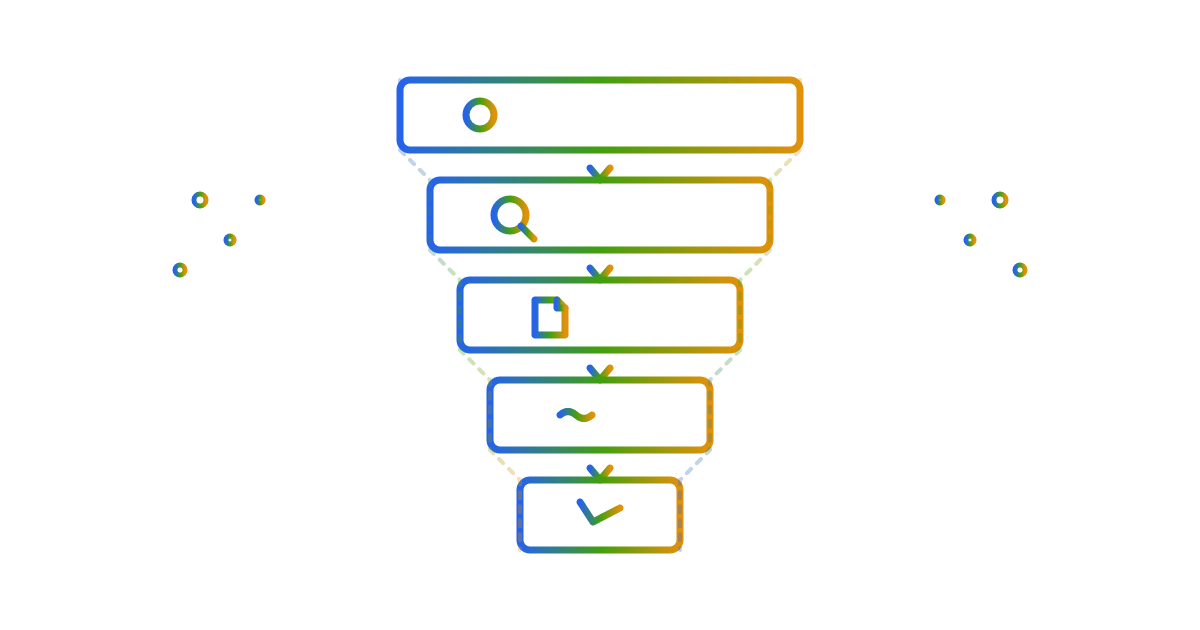
The layered hybrid approach most mature teams land on looks something like this:
Stage 1 (pipeline entry). BANT for fast pass/fail screening.
Stage 2 (discovery). CHAMP or SPIN to understand the real problem.
Stage 3 (proposal and evaluation). MEDDIC to map the committee, confirm the Economic Buyer, and nail the Decision Process.
The most common pairing in current practice is SPIN for discovery combined with MEDDIC for deep opportunity qualification. It works because SPIN gives you the problem context and MEDDIC gives you the organizational map.
One more thing worth saying plainly: a framework is a thinking tool, not a script. The goal is to gather the information each element demands. Not to run through the acronym in order on every call.
Buying Committees Broke Your Old Playbook
This is where modern B2B buying has quietly broken most qualification playbooks that were written more than a decade ago.
Buying committees have grown substantially over the past decade. Gartner's 2024 research confirms that average enterprise buying committees are large and still growing, with the most complex purchases involving even more stakeholders than the headline number. That's not a reason for panic; it's just the environment reps are working in now.
Forrester's 2024 data adds another layer: a large share of B2B buyers already have a preferred vendor before formal evaluation even begins. Qualification often means stepping into a process that is already in motion. You are not defining the criteria. You are competing against criteria someone else already shaped.
The top deal bottlenecks, per Influ2's 2026 survey, are budget approval (34%), internal alignment (22%), and security concerns (20%). Notice that all three of those are committee dynamics. Not individual-buyer objections. The person you're talking to loves the product and still cannot move it forward.
What this means for qualification practice:
Identifying a single decision-maker is no longer sufficient. Reps need to map the full committee: economic buyer, technical evaluator, champion, blocker.
Qualification has to track account-level and buying-group signals, not just one contact's engagement activity.
Consensus-building inside the account is now part of qualification work. Not a post-qualification sales step.
This is exactly why the Champion element of MEDDIC matters so much. An internal advocate who can navigate the committee when the rep isn't present isn't a nice-to-have in a large deal; it's a requirement. Without a champion, the deal has no engine.
Average B2B sales cycles remain long; that timeline means qualification has to be a sustained, recurring judgment call throughout the deal, not a one-time entry check you complete and forget.
Transactional deals with short cycles and a couple of decision-makers need different depth than multi-month enterprise commitments with large committees.
Score Leads to Prioritize Across Volume
Frameworks help you qualify individual leads through conversation. Lead scoring helps you prioritize across volume. Both are necessary. They do different jobs.
Traditional scoring pulls from two inputs:
Fit signals. Firmographic and demographic data: industry, company size, job title, geography. Does this lead match the ICP?
Behavioral signals. Page visits, content downloads, email engagement, demo requests. Is this lead showing intent?
Companies using well-designed lead scoring models report a 25% increase in conversion rates. That's not because scoring is magic; it's because without scoring, reps default to recency or gut feel when prioritizing, and both of those are worse than a calibrated model.
Common ways scoring breaks down:
Overweighting vanity engagement. A blog visit and a pricing page visit are not the same signal. Treating them similarly inflates scores for leads that are just browsing.
Static models. Scores don't decay automatically when a lead goes cold. A lead that was hot six months ago gets treated like it's still warm. It isn't.
Scoring individuals when the qualification unit is the buying group. This is the same mistake we keep making at every layer. Account-level and committee-level signals matter more than one contact's score.
The MQL threshold problem sits underneath all of this. A score that triggers MQL handoff is only useful if it actually predicts sales readiness. The gap between MQL and SQL volume in most organizations signals that thresholds are miscalibrated. The score says "ready." The rep gets on the call and finds out otherwise.
Sales and marketing have to agree on what a qualified lead actually looks like before scoring means anything. The handoff between a scored MQL and an SQL is where leads go to die when those definitions don't match.
AI Scoring Rewrites How Qualification Scales
The predictive lead scoring market hit $5.6 billion in 2025. It was $1.4 billion in 2020. A market that roughly quadruples in five years while growing at around 25% annually is not a trend; it's a shift in how the work gets done.
And yet only about 44% of organizations use lead scoring today. The majority of B2B teams are still qualifying manually. The gap between current practice and available tooling is large, which means the teams that adopt earlier get a real advantage.
Here's what AI-powered scoring does differently from traditional models:
Pulls signals across more data sources than any manual model can process: CRM history, intent data, technographic data, firmographic signals, behavioral sequences across the whole buying journey.
Updates scores continuously rather than on a schedule. When a lead goes cold, the score reflects it. When a lead re-engages, the score reflects that too.
Identifies patterns across historical deal data to weight signals by what actually predicted conversion, not what someone assumed would predict it.
Can surface account-level and buying-group signals, not just individual contact behavior.
The practical outcome is that reps get a prioritized list that reflects actual likelihood to buy, not just recency or volume of engagement. The leads worth calling bubble up. The leads worth deprioritizing get deprioritized automatically.
This is where the tooling conversation matters. Frameworks tell reps what to look for. Scoring models tell reps where to look first. But the gap between knowing the framework and applying it consistently across a full pipeline is an operational problem. Many teams now layer qualification frameworks with platforms that track and enforce criteria across the pipeline. Letterbrace, for instance, integrates qualification signals directly into CRM workflows and API-driven sales stacks, which lets reps apply the right framework without manually switching context between systems mid-call.
The qualification problem in B2B sales has always been the same: not enough time, too many leads, and too much variation in how individual reps judge what's worth working. The frameworks in this article solve the "what to look for" problem. Scoring solves the "where to look first" problem; AI-powered tooling solves the "how to do this at scale without it falling apart" problem. Use all three together, and the 40% conversion rate stops being a benchmark and starts being a reasonable expectation.