Essay sales leads
Cold Email Follow-Up Sequences for B2B Sales Teams
Most sales teams abandon follow-ups too early, leaving 42% to 59% of replies on the table.
That is the flat, unglamorous number most teams are working with right now. Three forces are driving it down at once: inboxes are simply flooded, with decision-makers fielding over 100 sales emails a week, Google and Microsoft have tightened spam enforcement, and a wave of low-effort AI-generated outreach is flooding inboxes.
The part that matters more than the average, though, is this. The gap between the typical sender and the best sender has never been wider. Teams that treat their follow-up sequence as an actual system, not a set of reminder emails, are hitting reply rates several multiples above that platform average. So this is a story about a channel that rewards structure over improvisation. It's a story about a channel that punishes improvisation and rewards structure, and most senders are still improvising.
48% of reps never send a follow-up, which kills the pipeline
A large share of reps never send a single follow-up after their first cold email goes unanswered, and most of the rest quit after one attempt, closing the laptop before the game even started. That's a deliverability problem. That's reps closing the laptop before the game even started.
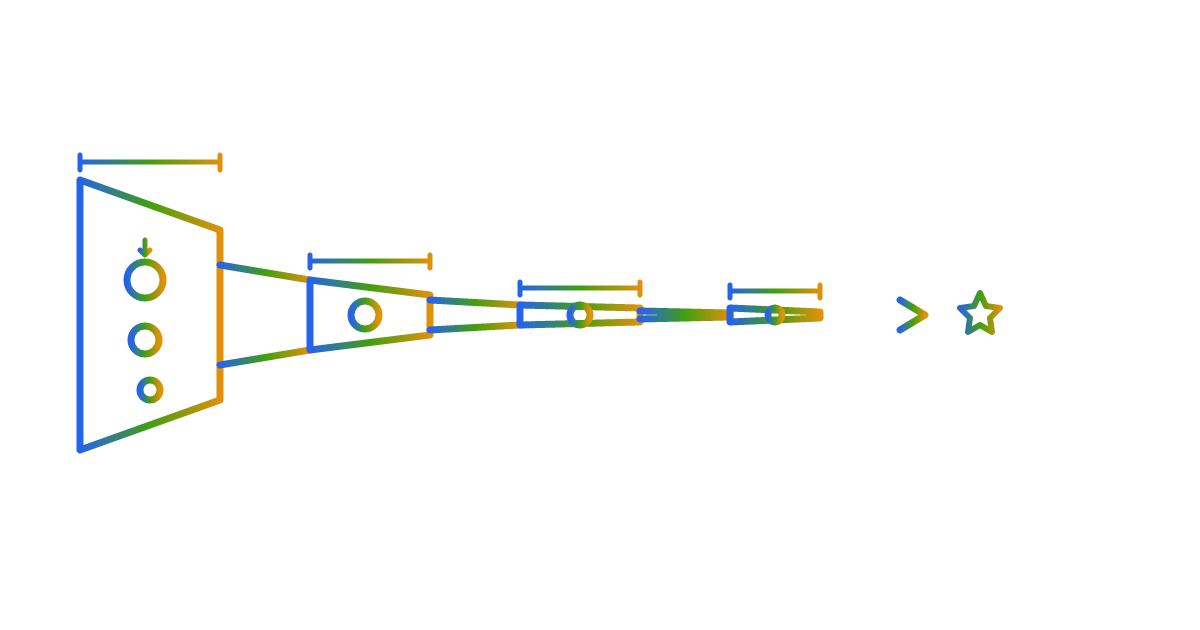
The math makes the cost obvious. The first email in any sequence gets the best per-step reply rate, no argument there, but follow-ups collectively pull in somewhere between 42% and 58.6% of all replies depending on whose dataset you trust. Stop at email one and you're leaving the majority of your possible replies sitting on the table, unopened, unanswered, unclaimed. A single, well-placed follow-up meaningfully lifts reply rates on its own, and contacting the same person multiple times drives significantly more total responses than a one-shot email ever will.
The first fix here is a deliverability fix, not a smarter subject line. It's showing up again. The first email is the opening move, not the whole game, and treating it like the whole game is where most pipelines quietly die. Across roughly 47,000 emails tracked at OneAway over the past 18 months, 68% of all positive replies came after the second touchpoint.
What sequence length the data supports
If persistence is step one, the next question is obvious: how much persistence? The data points to a fairly specific answer, 4 to 7 touchpoints. That's a substantial lift. That's the difference between a campaign that works and one that quietly fails.
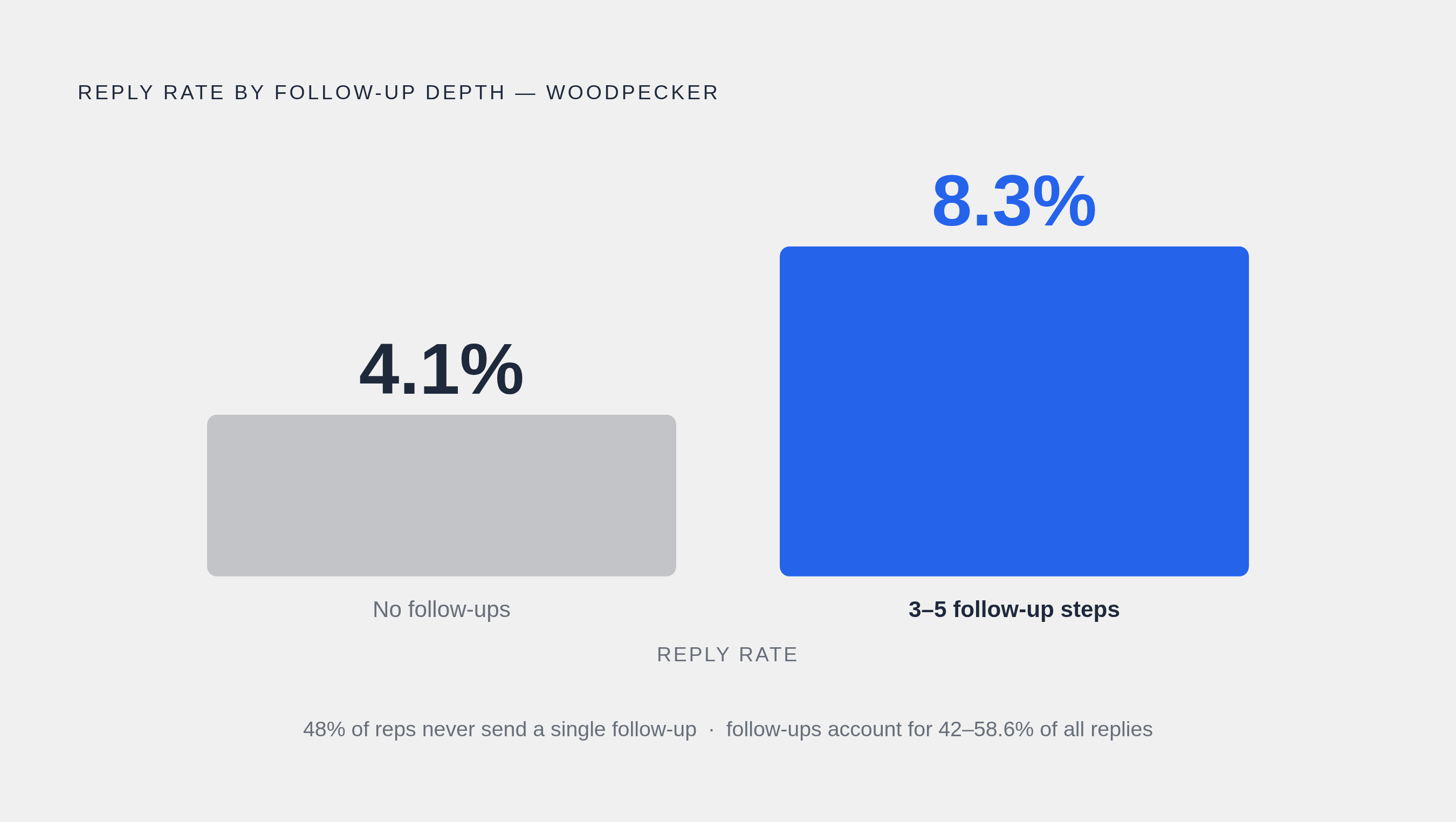
Adding even one follow-up to a bare, single-email sequence produces a meaningful jump in total replies, and multi-touch sequences consistently outperform standalone sends. But more isn't always better, past 7 steps, returns flatten out fast unless each new email brings something the prospect hasn't seen yet. Padding a sequence with more of the same message isn't persistence, it's noise, and prospects can tell the difference. The pattern holds across other major sales engagement datasets too: a big chunk of total replies comes from follow-up steps, and a one-and-done sequence forfeits most of what it could have earned. The teams posting the best numbers in 2026 aren't just following this cadence, they're pairing it with lists under 50 recipients and hooks tied to something timely happening at the account. The sweet spot is 4–7 touchpoints: campaigns with 3–5 follow-up steps hit 8.3% reply rates versus 4.1% for sequences with no follow-ups, per Woodpecker's data.
The role each step plays and why spacing matters
Sequence length only helps if each step is doing a different job. Step 1 needs to be the sharpest thing you send: the most personally relevant message, the one that sets up the value hypothesis. It posts the highest per-step reply rate of any email in the sequence, but because it's only one shot on goal, it still generates a minority of total replies. Step 2 isn't a nudge, it's reinforcement. The best-performing versions read like a continuation of a conversation already underway, not a reminder that one is overdue, and subject lines written as thread continuations consistently beat formal "following up on my last email" lines.
Step 3 is where things get interesting, and it deserves more attention than it usually gets. It's the single most productive email in the entire sequence for booking meetings, outperforming steps 1 and 2 combined. The trick is writing it like it's the first email you're sending, not the third. It's a new use case, a new proof point, and a new angle. Treat it as a fresh pitch that happens to land in an existing thread, not a follow-up to the follow-up.
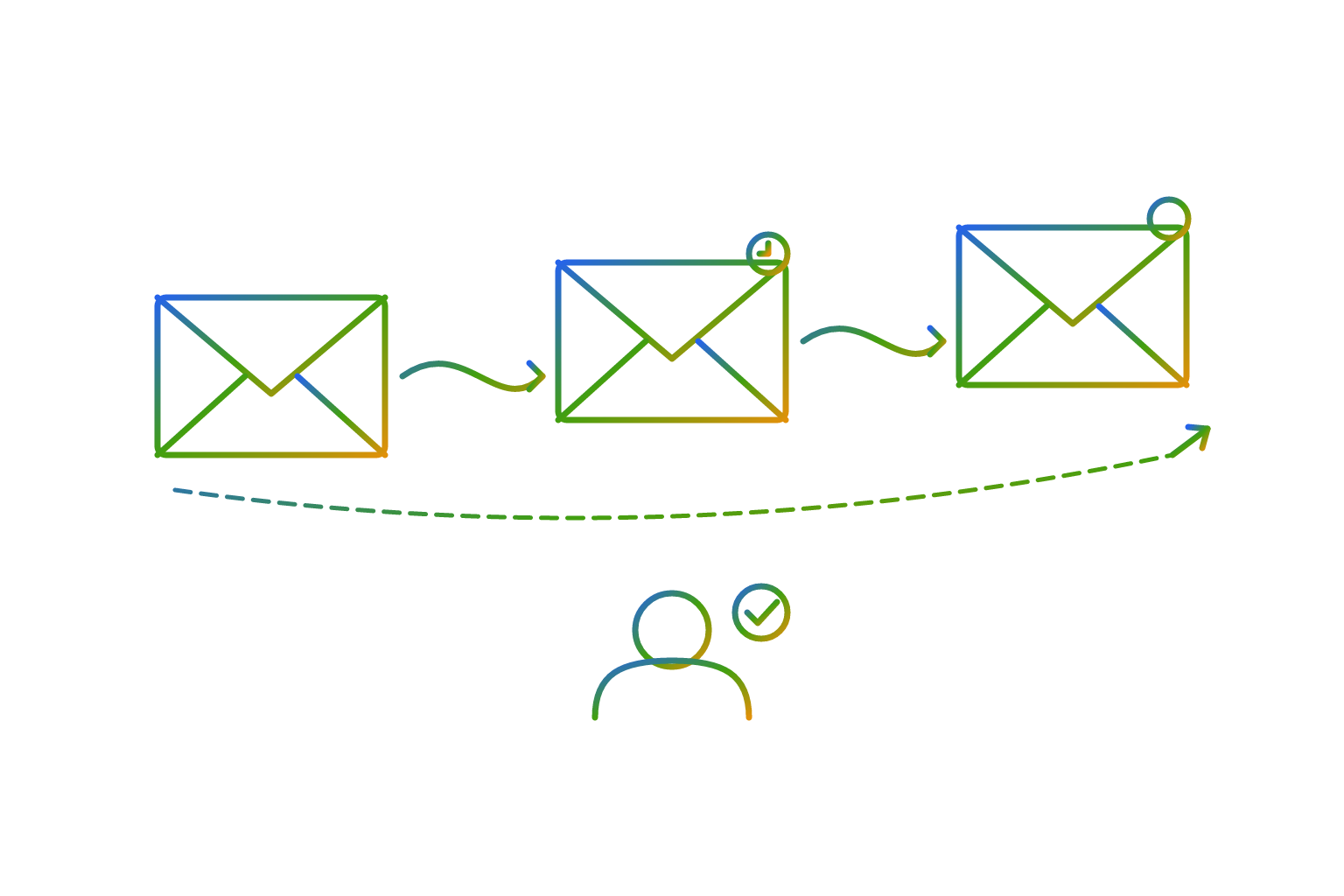
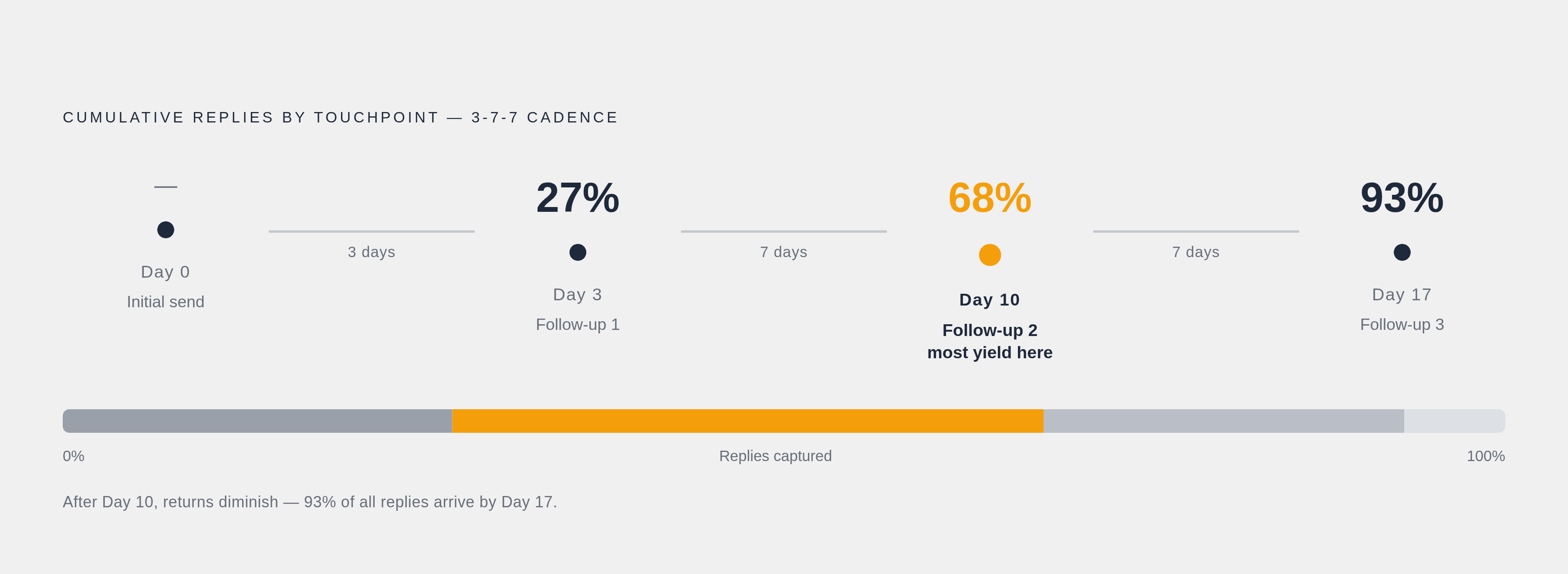
Steps 4 through 7 earn their keep on a smaller scale, catching prospects who simply weren't ready earlier in the sequence. Instantly's 2026 data even shows long-tail replies trickling in past step 10, at low but real rates. Spacing matters as much as content: the first follow-up should land 2 to 3 business days after the initial send, and the "3-7-7" cadence, follow-ups on Day 3, Day 10, and Day 17, captures roughly 93% of total replies by Day 17, with most of those arriving by Day 10. As for timing within the week, launch new sequences on Monday, save follow-ups for Wednesday when engagement peaks, and avoid Friday entirely, it's the weak link every time.
That's reps closing the laptop before the game even started.
What each email in the sequence should say
Start with the phrase to retire immediately: "just checking in." It's the worst-performing follow-up line tracked in 2026, it signals zero new value, it measurably reduces meetings booked, and it actively trains spam filters to notice you. Every follow-up needs to bring something the prospect hasn't seen: a fresh industry stat, a case study, a different angle on the pitch, or a nod to something that's actually changed in their world.
Length matters more than most senders think. Three to five sentences. That's it. Structure follows the same discipline, a short subject line, one opening sentence tied to something real happening at the account, a clear hypothesis about their problem, and one ask that takes no effort to say yes to.
Subject lines deserve their own short list of rules. Keep them short and plain, "quick question" beats a clever line every time. Lowercase formatting and specificity read as human, not templated. Curiosity works, clickbait doesn't. And Step 2 subject lines that read as thread continuations consistently beat anything formatted like a formal follow-up.
The prospect should understand what problem you're solving and who it's built for within five seconds of opening the email, full stop. Outcome framing wins over feature listing every single time. Personalization is the actual lever here, not just a nice-to-have. Real personalization means referencing something specific: an article the prospect wrote, a funding round, a leadership change, a pain point unique to their role, not a mail-merge with their first name dropped in. That gap alone should tell you where the effort belongs. The optimal length of 50–125 words achieves the highest reply rates, substantially higher than longer formats, according to Mailforge and Instantly, keeping to 3–5 sentences. Only 5% of cold email senders personalize every email, and those who do get 2–3x better results.
List quality and targeting as a multiplier on sequence performance
Emailing more than one contact at the same company lifts response rates by 93% compared to reaching a single contact alone. Sit with that for a second, because it reframes the whole targeting conversation. Structure and copy can only carry a sequence so far if the list underneath it is wrong, and multi-threading is often the fastest way to expose whether it is.
Smaller, tighter lists consistently beat bigger, looser ones. Campaigns targeting fewer than 50 recipients meaningfully outperform lists of 500 or more on reply rate. Advanced, signal-specific personalization, tied to a leadership change, a funding round, a hiring spike, a product launch, produces response rates many times higher than the generic baseline.
Campaign A blasts a big generic list with a one-size-fits-all message. Campaign B sends a small, sharply targeted list something personal and specific. They land nearly identical total reply counts. But Campaign B gets there with a fraction of the infrastructure load, a fraction of the spam risk, and a lot more of those replies landing on the positive side. Same output, wildly different risk profile. That's the multiplier at work, and it's the reason list quality sits upstream of every structural decision covered so far.
When to switch channels rather than send another email
A well-built sequence already has an exit ramp built into it, triggered when three email steps in a row produce nothing. At that point, the move isn't a fourth email, it's a switch to LinkedIn, because a new channel resets the context the prospect has with you. The switch works because it doesn't repeat the pitch, it opens a new, lower-friction door into the same conversation. Practically, that means leading with a connection request that references the prior email outreach, or, if you're already connected, moving straight into a Messenger campaign, an approach Belkins reports produces reply rates many times higher than email alone.
Cold calling sits above that as the escalation layer, reserved for the accounts worth the extra effort. By the time a call happens, the prospect has already seen the name across email and LinkedIn, so it lands as a warm call in everything but name, and Belkins' data shows this sequencing books roughly one in three appointments.
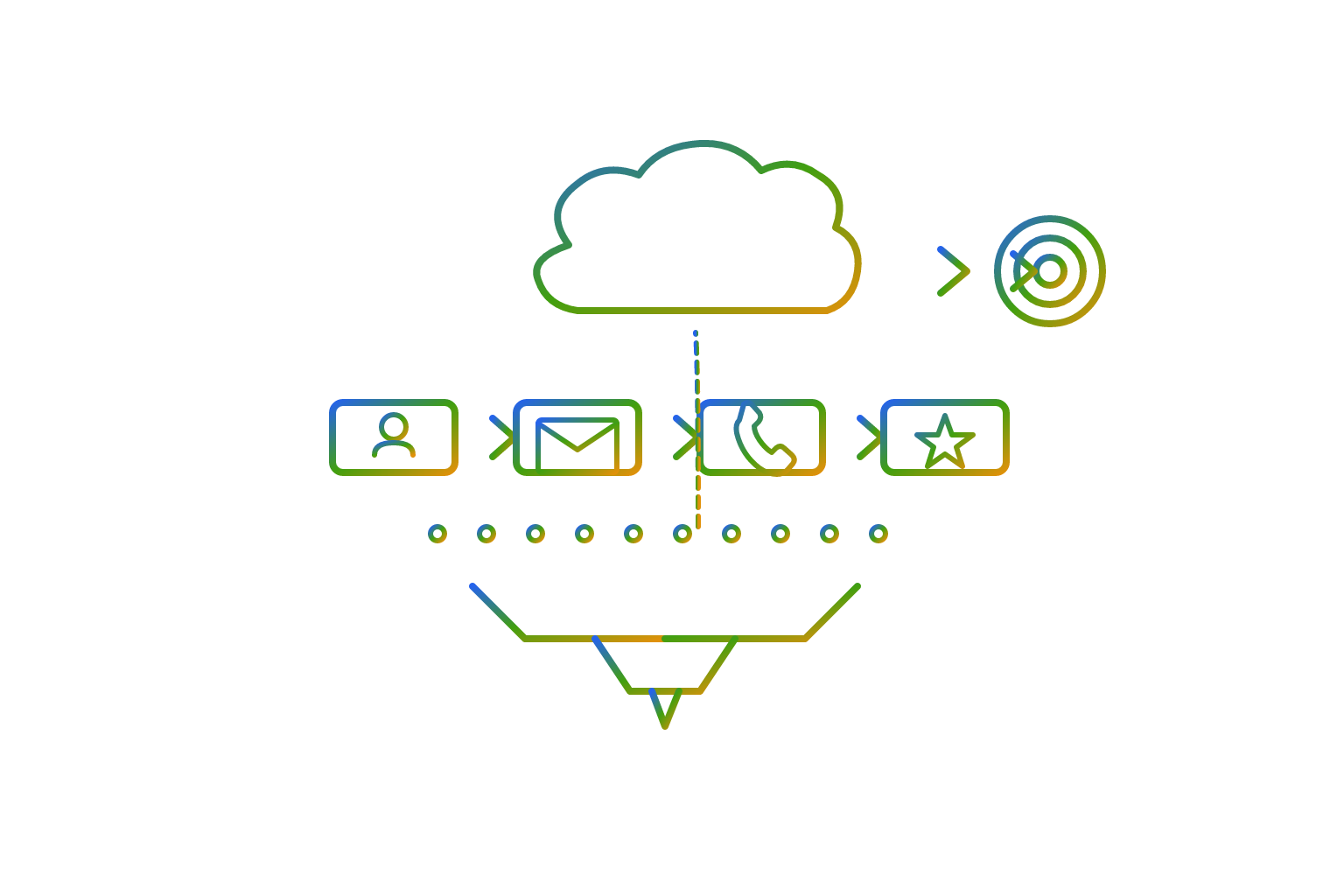
Put together, the full sequence looks like a relay, not a repeat. The first email in the sequence goes out sharp, specific, and personalized. Email step two reinforces it with a supporting angle. Email step three reframes the whole pitch with a different hook, and it's the step that books the most meetings in the entire sequence. If step three still gets silence, a LinkedIn connection request referencing the prior emails comes next. For the accounts worth the extra weight, a cold call referencing both the email and LinkedIn touchpoints follows. And if none of that lands, the sequence closes on a low-commitment, long-horizon email, something as simple as asking whether it's worth reconnecting next quarter, rather than one more email begging for a reply today. The full channel sequence that works, per Belkins' methodology, is as follows.
Deliverability as the foundation that sequence structure depends on
None of the structure above matters if the email never reaches the inbox, and Instantly's 2026 benchmark data backs that up directly: deliverability is now the single biggest variable in campaign performance, ahead of subject lines, ahead of copy quality, ahead of everything else on this list. A perfectly sequenced, perfectly personalized email sitting in a spam folder is a draft. It's a draft.
The infrastructure underneath is non-negotiable at this point: SPF, DKIM, and DMARC authentication set up correctly, spam complaint rates kept under the threshold Google now actively flags, bounce rates kept low, and proper domain warm-up before any sequence goes live. Skip any one of those and the rest of this guide is irrelevant.
Open rates, meanwhile, have quietly become close to useless as a metric. Apple Mail Privacy Protection pre-fetches email content automatically, which registers as an "open" whether or not a human ever saw the message, and with Apple Mail holding a large share of the email client market, that inflates reported open rates across most B2B campaigns. Reply rate and positive reply rate are what's left standing as metrics that mean anything. One analysis of a large email dataset found that turning off open tracking entirely more than doubled reply rates, because the tracking pixel itself can hurt deliverability. Test whether your open tracking is helping you before assuming that it is. On top of that, one-click unsubscribe is now a requirement for bulk senders reaching Gmail and Yahoo addresses under 2024 sender rules, not a courtesy feature. Most campaigns land well below a strong meeting-booking benchmark, and deliverability, not sequence design, not copywriting, is usually the reason before anything else gets blamed.
How to measure whether a sequence is working
Everything else is a distraction dressed up as a metric.
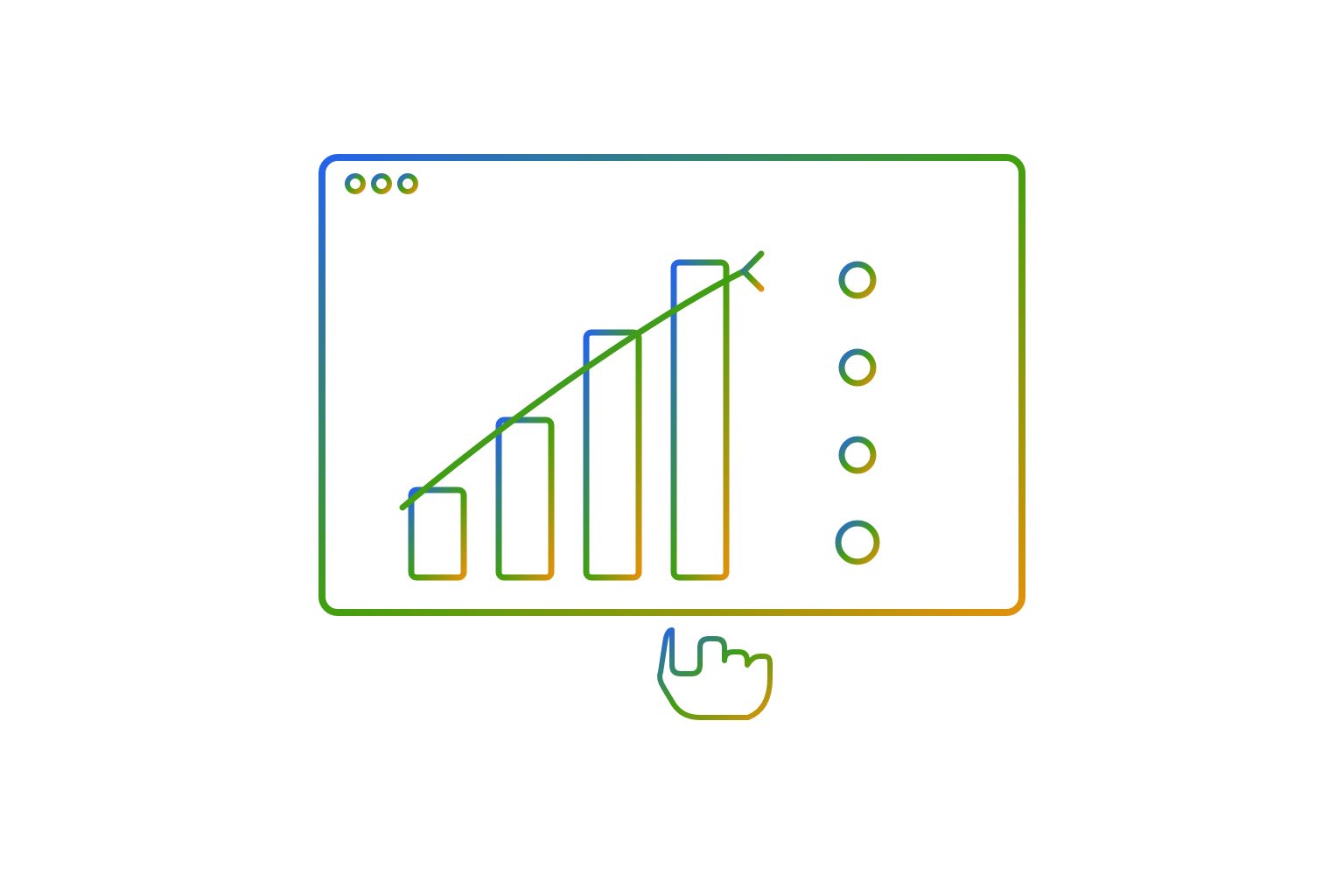
Orient against real benchmarks, not gut feel: the platform-wide average sits low, a genuinely good campaign runs several points above that average, and the top tier, running tight targeting alongside advanced personalization, reaches multiples of the average. A sequence that produces zero replies isn't automatically broken, but it isn't automatically fine either. A broken measurement and a genuine lack of relevance look identical on the surface. They are not the same problem, and treating them the same way wastes weeks.
Track performance step by step, not just as one campaign-wide total. If step 3, the reframe, isn't outperforming steps 1 and 2, the reframe isn't working, and the fix is in the copy, not the calendar. And know when to stop emailing and start switching channels: past 5 email steps with no reply, more email is unlikely to be the answer, and the data points to a channel switch.
Notes
- Cold Email Statistics Based on Sending Over 20M Cold Emails
Provided the specific reply rate figures comparing sequences with 3–5 follow-up steps (8.3%) versus sequences with no follow-ups (4.1%).
- Cold Outreach That Gets Replies: A 2026 Playbook for B2B Sales Teams | Salesmotion
Supplied the figure that only 5% of cold email senders personalize every email.
- Best Cold Email Follow-Up Sequences (2026), Ranked by Reply Rate | OneAway
Provided the dataset of 47,000 emails showing 68% of positive replies came after the second touchpoint.
- Cold Email Guide 2026: Best Practices & Benchmarks | Autobound
Supported the claim that senders who personalize every email get 2–3x better results.
- Cold Email Benchmark Report 2026: Reply Rates, Deliverability and Trends
Provided the benchmark figure that follow-ups collectively account for 42% of all replies and established deliverability as the single biggest variable in campaign performance.
- Cold Email Follow Up Timing: Best Schedule for 2026 - Growth List
Provided the statistic that emailing more than one contact at the same company lifts response rates by 93% compared to a single contact.