Essay customer interactions
Customer Research Surveys for B2B Product and GTM Teams
Tie survey research to specific business decisions your team needs to make.
Most B2B survey programs get built backward. Someone decides it's time for "the annual survey," fires it off to whoever's email address is easiest to find, and three weeks later a slide deck lands in a shared drive where it will live out its days unread. The real flaw isn't the survey itself, it's the thinking behind it. A survey only earns its keep when it's built around a specific decision someone has to make: a renewal call, a roadmap bet, a repositioning move. Before a single question gets drafted, someone should be able to name the decision the answers will feed. If nobody can name it, the survey shouldn't go out. Roughly three in ten B2B organizations don't trust that their go-to-market work actually moves the business, and about a quarter of GTM budget gets spent on efforts nobody measures. Survey programs with no decision attached to them are a direct contributor to that gap.
The Buying Committee Problem Most Surveys Ignore
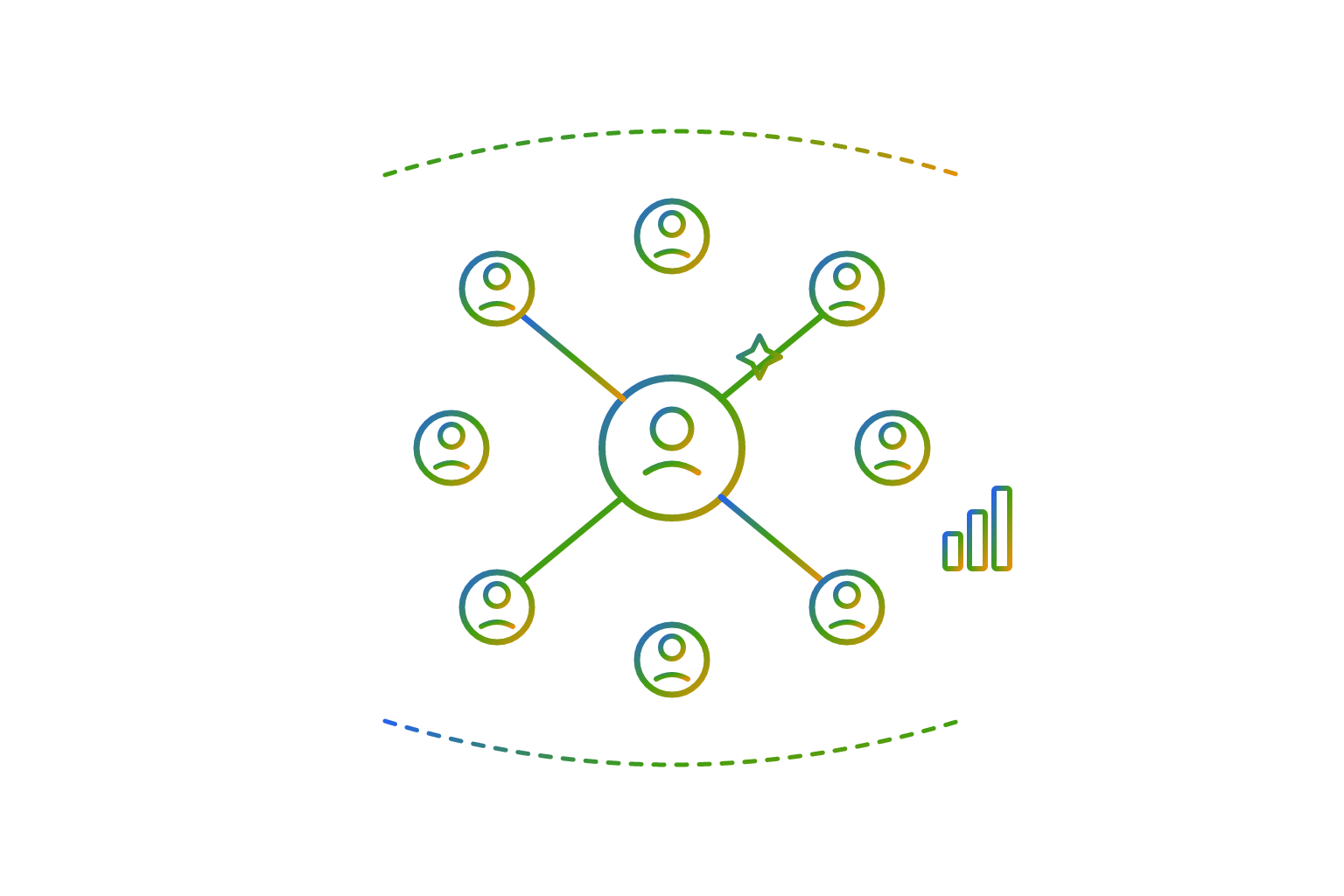
There's no such thing as one B2B customer. It's a committee. You've got the economic buyer signing the check, the product champion who fought for the deal internally, the end users actually clicking around in the software every day, a technical evaluator checking for security holes, and sometimes procurement hovering over all of it. Each of these people knows something different, and each of them is worried about something different.
The average B2B purchase pulls in around ten stakeholders, each checking four or five sources before they'll commit to an opinion. And yet the default survey lands in exactly one inbox: the champion's, because that's the person who answers emails fastest. The economic buyer never sees it. The end users grinding through the product daily never see it. So the "customer feedback" a company acts on is really just one person's feedback.
Each stakeholder holds a different piece of the puzzle, and no single survey question reaches all of them:
The economic buyer can tell you about business impact, whether the ROI story is landing, what competitors are circling, and whether renewal is even on the table.
The product champion knows where the feature gaps are and where internal adoption is stalling out.
The end user can tell you where the product breaks down day to day, which is the real Customer Effort Score signal, unfiltered through a manager.
The technical evaluator is focused on integrations, security reviews, and compliance requirements.
Asking the champion about integration pain gets you a shrug. Asking the end user about renewal intent gets you a blank stare. Match the question to the person who actually holds the answer.
Match the Survey Instrument to the Moment
Getting the right person isn't enough if you ask them the wrong thing at the wrong time. Firing an NPS survey the moment a support ticket closes measures frustration, not loyalty. Sending a CES survey at renewal time asks about ease of one interaction when the real question is whether the whole relationship is worth keeping. Instrument and moment have to line up, or the data means something other than what you think it means.
NPS (Net Promoter Score) measures loyalty and renewal likelihood. It works best after a periodic business review, around Day 60 or 90 of the relationship, and roughly 45 days before a contract ends, while there's still time to act on what it tells you. A score above zero counts as positive; above 50 is genuinely excellent.
CSAT (Customer Satisfaction Score) measures how someone felt about one specific interaction: a support ticket, an onboarding session, an implementation. Anything north of 80% is strong.
CES (Customer Effort Score) measures friction, meaning how much work someone had to do to get something resolved. Best deployed right after support resolution or onboarding. Lower is better here, which trips people up because most scores in business run the opposite direction.
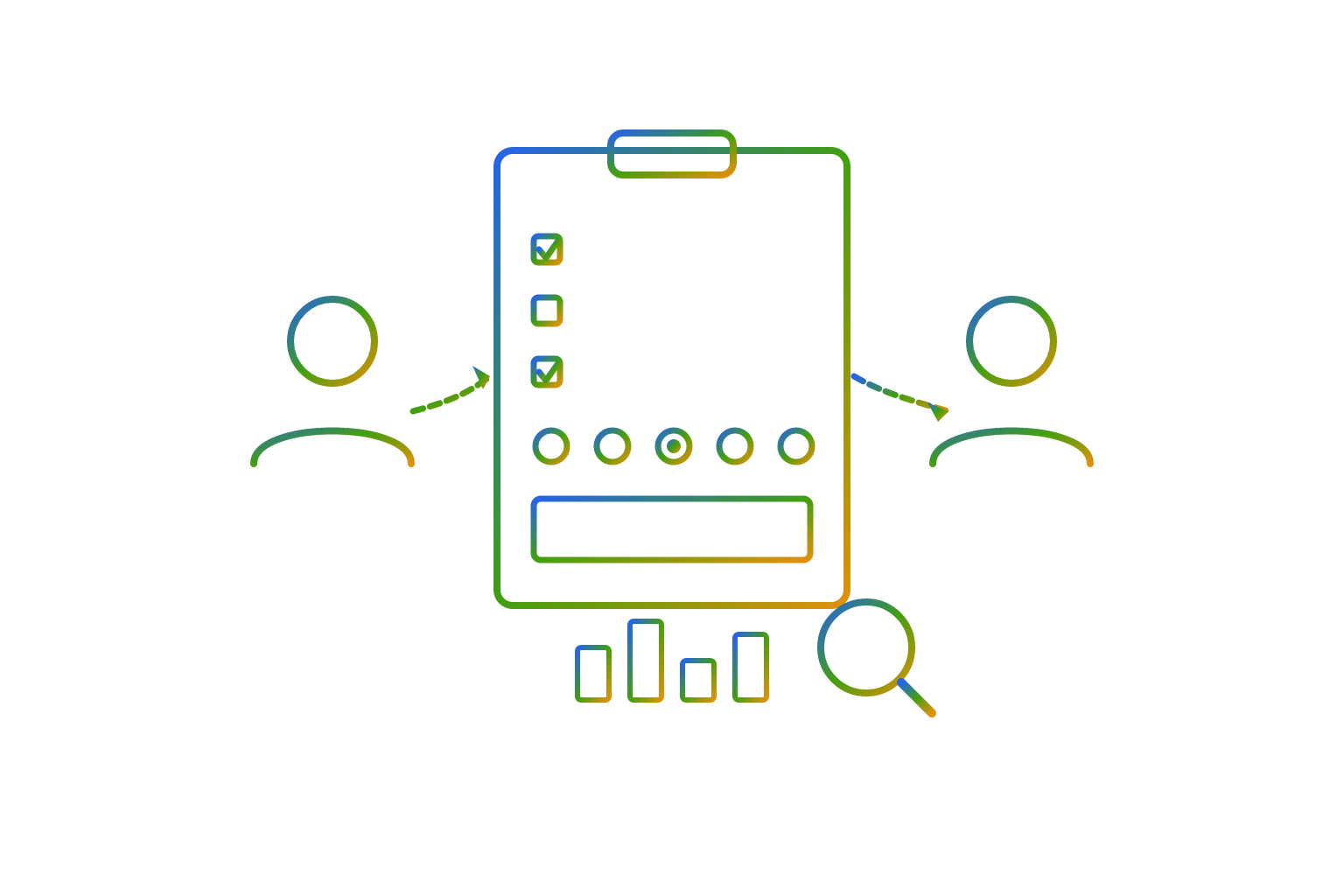
Product feedback surveys dig into feature priorities and usability, run quarterly or after a major release, mixing quantitative measures with open-ended answers.
There's also a separate timing axis for GTM research. Pre-launch validates the buyer, the problem, the positioning, and the price before a team spends real resources building something nobody asked for. Launch tests whether the messaging and sales narrative actually land with real prospects. Post-launch is where win/loss and adoption research live.
One additional rule: cap it at one survey per contact within a set window, 14 days is the standard. Skipping this causes different teams to hit the same inbox with different instruments, and response rates collapse under the weight of it.
The average B2B purchase pulls in around ten stakeholders, each checking four or five sources before they'll commit to an opinion.
Getting Responses From Stakeholders Who Matter
Response rates have been sliding, down somewhere in the 1 to 2 percentage point range per year since 2019, driven by inbox overload and surveys that render poorly on a phone screen. Nobody fills out a ten-question NPS survey on a phone while between meetings.
Have the Customer Success Manager send a short heads-up email the day before the survey goes out. Just a "hey, you'll get something from us tomorrow, would love your take." That one move has lifted response rates from around 4% up to 25% in documented B2B SaaS cases.
This matters even more for hard-to-reach stakeholders. Economic buyers and senior executives don't respond to cold surveys because cold surveys look like spam to someone whose calendar is booked weeks out. When a CSM they already know gives the survey a human face first, it becomes a scheduled part of a relationship they're already in.
Follow-up helps, but only up to a point. One reminder, with a fresh subject line, can lift response rates by as much as 36%. A second reminder still helps some. A third is where fatigue sets in and goodwill toward the program starts to erode.
Route Results to the Team Owning the Decision
When the survey comes back with a strong response rate and clean data, the next question is what happens to it. In most companies, it sits in a monthly report that reaches the account manager or product manager about two weeks after the moment for acting on it has already passed. The timing kills it.
The fix is a routing matrix, decided before the survey ever launches. Every survey type gets a named owner and a named trigger condition, so results move automatically instead of waiting for someone to remember to forward an email.
NPS from an economic buyer drops below threshold? Goes straight to the account manager, flagged ahead of the renewal window, not after.
CSAT tanks after onboarding? Customer success lead gets it same-day.
CES spikes on one specific workflow? Straight into the product team's friction log.
High NPS paired with strong open-ended comments? Routed to marketing as a reference or case study candidate.
Promoters often produce quotable, unprompted language in their own words that no copywriter could replicate. Letting that sit in a spreadsheet instead of a sales deck is a wasted asset.
Teams trying to hit revenue targets keep pointing to signal overload and scattered, disconnected data as the reason it's hard. A survey program with no routing layer doesn't solve that problem; it adds another pile of noise on top of it.
Validate Positioning and Inform the Product Roadmap
Survey data earns its real value when it stops measuring satisfaction and starts capturing what customers are actually trying to get done. The pains and gains hidden in open-ended answers form raw material for a value proposition, not just color commentary on a slide.
On the roadmap side, one customer mentioning a missing feature is an anecdote. Many customers mentioning the same missing feature across separate, unconnected survey touchpoints is a pattern, and patterns are what aggregate survey data is built to surface. No single account call gives a product team that view.
There's also a category of signal that demands immediate attention rather than a place in a feedback queue: when a meaningful share of enterprise accounts reports through NPS follow-ups or win/loss surveys that they're actively evaluating competitors. That's a strategic problem requiring immediate action, not a quarterly agenda item.
Win/loss research belongs in this same program, not off in its own silo. Interviews with people who evaluated the product and chose a competitor, plus surveys sent after churn, answer a question that CSM-facing surveys structurally cannot: why the people who never became customers walked away.
Build the Survey Program as a System
A program that works doesn't run on one big annual survey. It runs three categories in parallel, continuously.
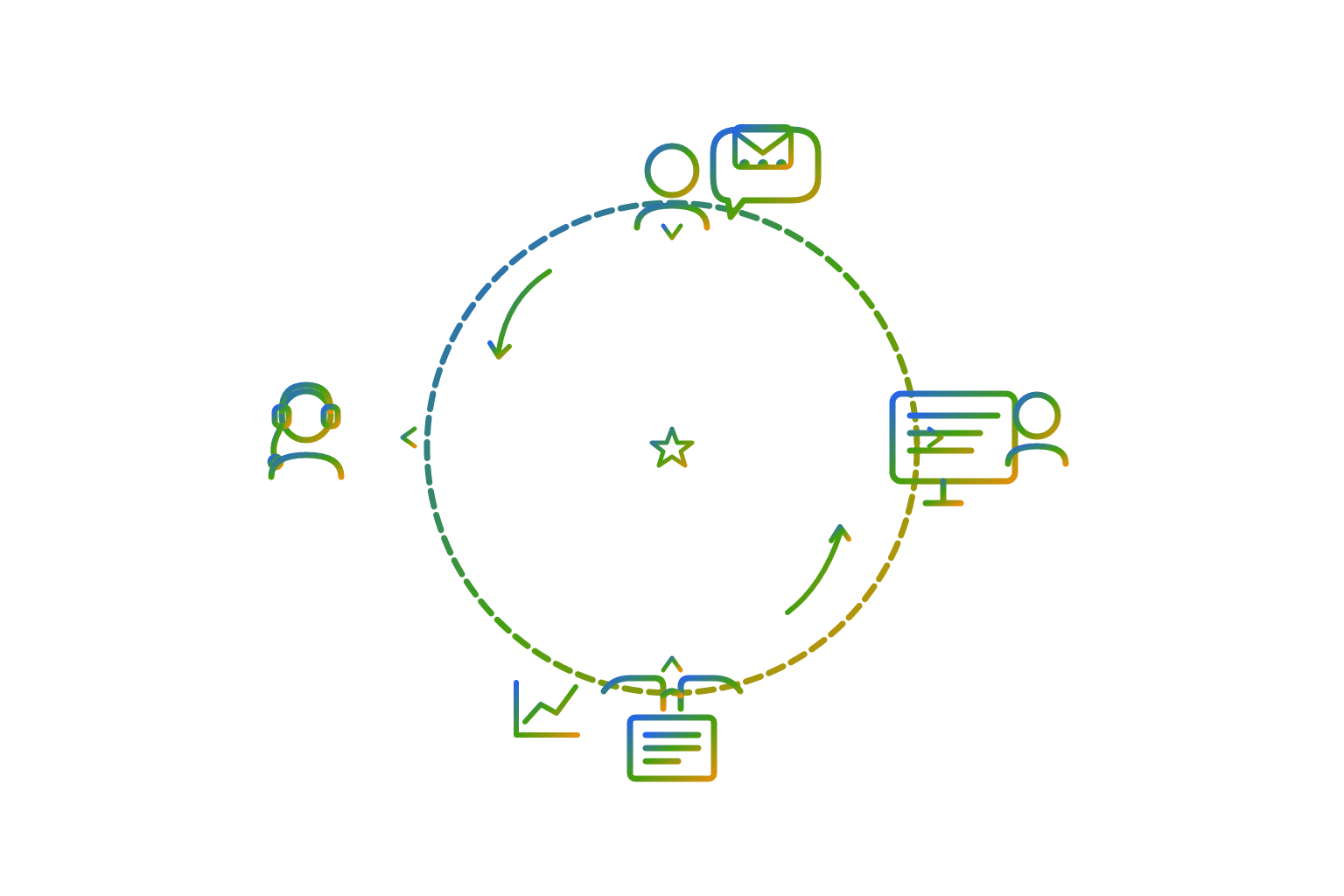
Census surveys go to the full customer base and track market-level trends and NPS benchmarks over time. Targeted foundational surveys go to specific product lines or customer segments and feed roadmap and positioning decisions directly. Triggered surveys fire at specific milestones: a support ticket closing, onboarding wrapping up, a renewal date approaching, and they drive retention and expansion plays in close to real time.
The suppression rule and the routing matrix are not optional additions for when a team has spare time. A 14-day suppression window, named owners for every survey type, and a cadence for closing the loop with respondents are the baseline a program needs to produce usable data instead of noise.
Reporting standards matter too. A score reported with no sample size and no confidence range doesn't give anyone enough information to act. How many people responded, what share of the target group that represents, and whether non-respondents differ meaningfully from respondents are part of the result, not a footnote.
Scale introduces its own coordination problem. For roughly every dedicated researcher, there are about five non-researchers in the field running their own surveys: sales teams, CS teams, product managers, all with good intentions and their own spreadsheets. Without a shared suppression rule and a single routing matrix everyone actually uses, multiple teams end up hitting the same contact with conflicting surveys in the same week. Response rates drop, trust erodes, and the next survey that lands in that inbox gets deleted on sight, regardless of how well it's designed.
Notes
- New Research Of 511 B2B Leaders Reveals GTM Execution Is Costing Organization Revenue In 2026
Provided the statistic about the share of GTM budget spent on unmeasured efforts and the proportion of B2B organizations that don't trust their GTM work moves the business.
- https://helply.com/blog/customer-survey-strategy-b2b-saas
Supplied the documented figures on CSM pre-notification lifting response rates from 4% to 25%, and a single reminder boosting rates by up to 36%.